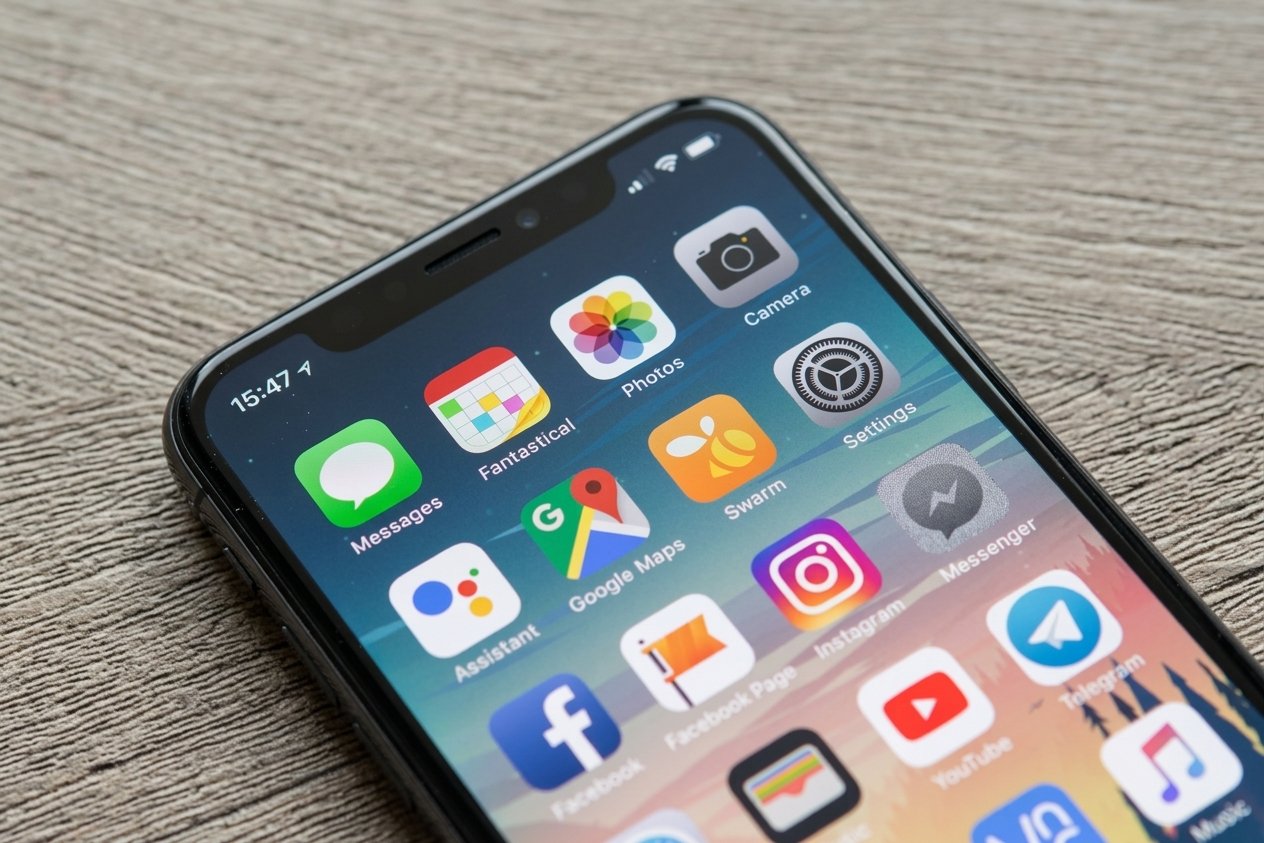

Every few months a new article appears claiming that every business needs a mobile app or it will be left behind. That advice is both true and misleading at the same time. Some businesses genuinely benefit from having an app. Others would waste tens of thousands of pounds building something their customers will never open twice.
The honest answer in 2026 is that a mobile app is a tool, not a status symbol. It makes sense when it removes friction that a website cannot remove, and it makes no sense when the same job can be done better through a responsive site or a simple web flow.

We have built apps for clients in retail, services, and content, and we have also advised clients not to build one. The businesses that saw the biggest returns were the ones that already had a clear, repeated use case. The ones that struggled were the ones that built an app because it felt like the right thing to do.
In this article, we will look at when a mobile app actually makes sense in 2026, what it really costs to build and maintain, and how to decide whether your business is ready for one.
The clearest signal that you need an app is repeated use. If a customer interacts with your business more than once a week, an app can genuinely improve their experience. Loyalty programs, booking systems, delivery tracking, and anything that benefits from notifications are natural fits. The app becomes a shortcut that saves the customer time, and that is why they keep coming back.
Another signal is when the app can do something a website cannot. Offline access, native camera features, background location, push notifications, or integration with device hardware. If none of those are essential to your service, a responsive website will almost always be more cost effective and reach a wider audience.
If your business interacts with most customers once or twice, an app is usually the wrong investment. A restaurant that people visit occasionally does not need an app, it needs a fast website and a clean booking flow. A consultant whose clients are long-term but low-touch does not need an app, they need a good CRM. The app would just sit unused on a phone.
The other warning sign is when the app would only exist to "look modern". If you cannot clearly describe what the app does that your website does not already do, that is the answer. You do not need an app yet.
The build is only part of the cost. Ongoing maintenance, operating system updates, security patches, and feature improvements add up year after year. A serious business app typically costs more to maintain in year two and three than it did to build in the first place. Anyone who tells you otherwise is either inexperienced or trying to sell you something.
On top of that, you need a plan for getting people to download and keep the app. App store visibility is competitive, and organic discovery is low. If you do not have a strong reason for users to install and return, the download numbers will stay small no matter how good the app itself is.
The practical takeaway for 2026 is this. If your customers interact with you frequently, and an app removes real friction, it is worth the investment. If not, a fast, well-designed website will serve your business better, for far less money, and it will reach people on every device they own.
Your email address will not be published. Required fields are marked *
2026 © DevMorph. All rights reserved.